Your tech is under a house. The phone rings out. That caller is dialling the next name on the list before your voicemail finishes. Our agent picks up on the first ring, qualifies the job and books it.
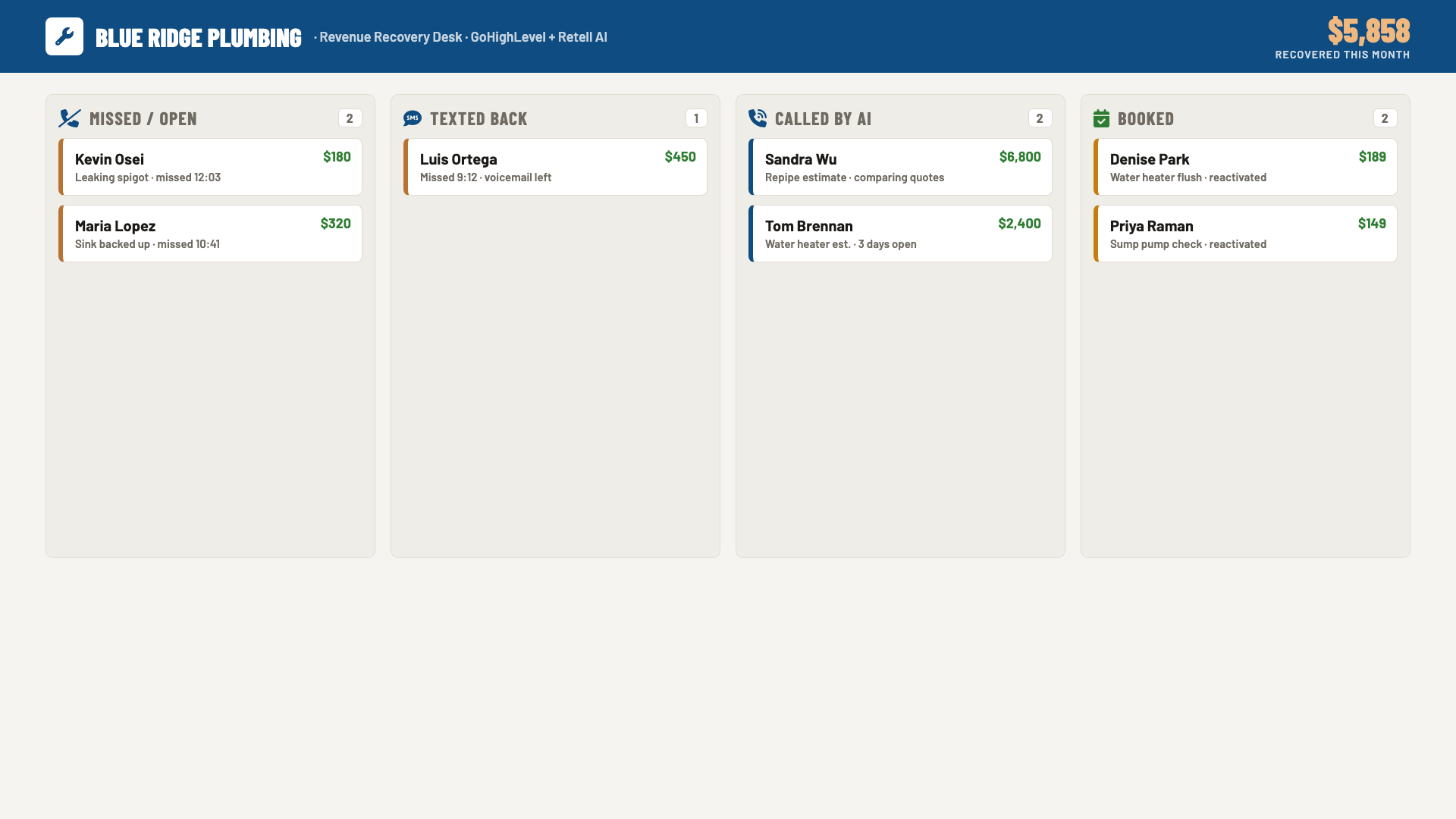
Not a lost lead you can retarget. A job, with a ticket on it, that somebody else did this afternoon.
Not a generic receptionist. Each of these is scripted for the trade, with the dispatch fee, the service area and the escalation rules the business actually uses.
Text back in 8 seconds while they're still deciding. AI callback at 52. It asks what's leaking, whether the water is off, confirms the address is in the service area, and books the first slot — quoting the dispatch fee and nothing it wasn't given.
Calls the customer back, asks what's holding it up, handles the two objections you hear most — price and timing — offers financing if you have it, and either books the work or marks it dead so it stops clogging the pipeline.
Works the customer list nobody has time to call. Maintenance checks before the cold snap, water heater flushes, filter changes. Books straight into the calendar and skips anyone with an open job.
Vendors, job seekers, warranty spam and out-of-area calls get handled and logged without a tech's phone buzzing. Anything urgent, angry or outside the rules goes straight to a human, and the agent says so out loud.
Blue Ridge Plumbing is a demo business with a real agent behind it. Tell it your sink is backed up and watch the job appear on the board.
$900 to build it — $600 as a founding client — then $450 a month with 500 call minutes included. Just need the follow-ups automated? One GoHighLevel workflow is $400. A human answering that phone costs $2,800 to $4,500 a month and goes home at five.
No. It quotes the dispatch fee and any flat-rate items you give it, and nothing else. For anything that needs eyes on the job it says a tech will price it on site. It is not allowed to guess, and that rule sits above everything else in the script.
It asks the safety questions first — is the water off, is there standing water, is anyone at risk — then either books the emergency slot or transfers straight to the on-call number, depending on the rules you set. Emergency handling is the one path we test hardest before launch.
Yes. It sits on the number already on your vans and your Google profile, through LC Phone or your own Twilio account. Customers don't see a change.
It says it's an assistant if asked, and we recommend it says so up front. Most callers with a flooded kitchen care that someone is booking them today, not who typed the script. Pretending otherwise is how a business gets a bad review it can't answer.
Five to seven days from the call where you tell us your services, your prices, your service area and the three calls you miss most. Then it runs on real calls for thirty days with the baseline measured first, so you get a number rather than an impression.
We'll come back with what an agent can handle, what it should hand to a human, what it costs to run each month — and a demo scripted to your business within 48 hours.
Two years of GoHighLevel lead-capture and follow-up pipelines across 30+ home-service businesses, then seven production voice agents on Vapi and Retell. Small on purpose: you talk to the engineer who writes the code, not an account manager.
 Adel Atya